Artificial Intelligence and the Future of Human Lives
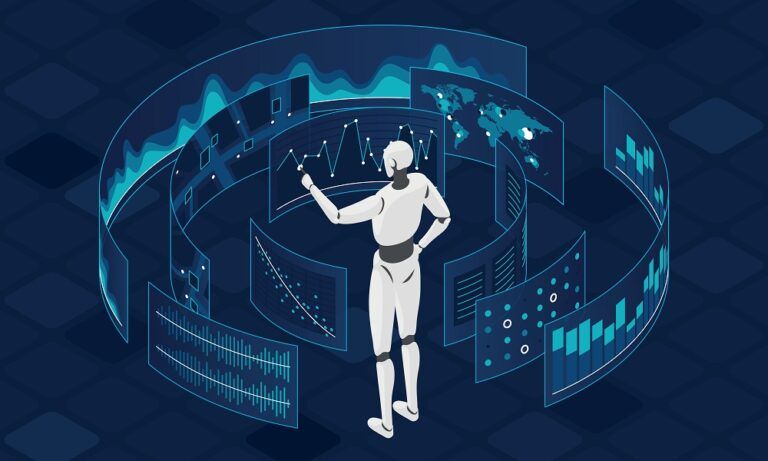
In the last decade, Artificial Intelligence (AI) has transitioned from the pages of science fiction to the heart of our daily existence. Without any loud proclamations, it is now deeply embedded in the systems we interact with—from voice assistants that respond to our commands, to financial algorithms managing billion-dollar portfolios. What was once a luxury of research labs is today silently orchestrating decisions that impact millions.
The beauty of AI lies in its invisibility. When it functions best, we barely notice it. A student learning through a personalized app, a diabetic patient receiving tailored medical advice, a traveler navigating unknown streets with the aid of smart maps — each scenario illustrates how AI is simplifying complexity and enabling better choices. Yet, the true strength of AI is not merely in automation, but in augmentation — enhancing human potential rather than replacing it.
In healthcare, AI-driven diagnostics are reducing errors and saving lives. Algorithms trained on thousands of medical records can now detect conditions far earlier than the human eye could, offering a chance at intervention before it’s too late. Similarly, in agriculture, AI-powered drones are monitoring crop health with precision, helping farmers optimize resources and increase yield, even in resource-scarce regions.
"The true strength of Artificial Intelligence is not merely in automation, but in augmentation — enhancing human potential rather than replacing it."
In business and governance, AI has brought a wave of data-driven decision-making. Companies no longer rely on instinct alone; predictive analytics are reshaping how products are developed, marketed, and distributed. Governments, too, are turning to AI for policy planning, traffic control, and even early detection of natural disasters, ensuring timely response and public safety.
However, like all transformative forces, AI brings its own set of challenges — ethical concerns, privacy risks, and the fear of job displacement. It is essential that as we adopt this technology, we also build robust frameworks to govern its use. Education systems must evolve to prepare the workforce for an AI-centric future, emphasizing creativity, empathy, and critical thinking — traits that machines cannot replicate.
Artificial Intelligence is not a distant innovation of tomorrow; it is the invisible force quietly shaping today. As it continues to grow in capability and influence, the real question we must ask is not whether AI will change our lives — but how wisely, ethically, and inclusively we will allow it to do so.